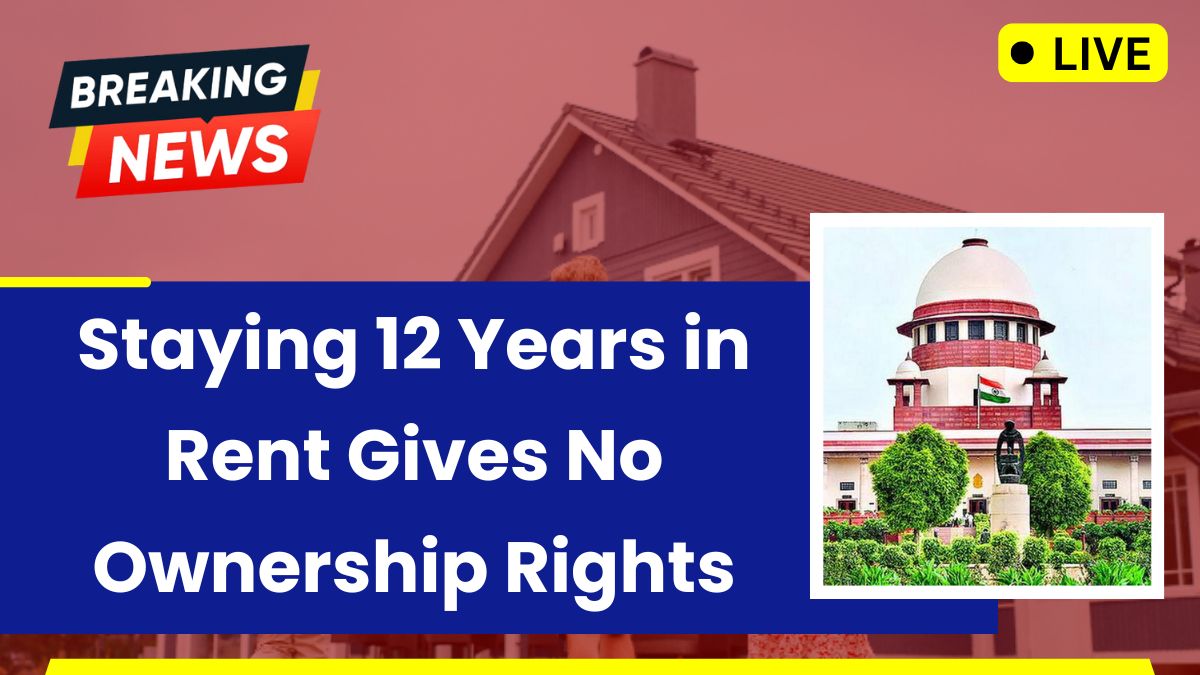
Supreme Court Ruling : The Supreme Court has cleared up a very common misunderstanding about rental homes. Many people believed that if a tenant lives in a rented property for more than 12 years, they could claim ownership. The court has now made it very clear that this is not true. Just staying in a rented house for a long time does not give a tenant any ownership rights. This decision brings relief to property owners and clears confusion among tenants about long-term renting.
Difference Between Renting and Owning
The court clearly explained that renting a property and owning it are two completely different legal situations. When someone rents a house, they are living there with the owner’s permission. Ownership, on the other hand, comes only through legal transfer like a sale deed, inheritance, or gift deed. Even if a tenant has stayed in the same house for 20 or 30 years, they still remain a tenant unless the owner legally transfers the property to them. The court stressed that tenants always recognize the landlord as the owner, which makes ownership claims invalid.
Why Long Stay Does Not Mean Ownership
There has been a long-standing myth that staying in a property for many years automatically turns a tenant into an owner. The Supreme Court rejected this idea. The judges said that simply living somewhere for a long time is not enough. For someone to claim ownership without purchase, their possession must be against the owner’s wishes, not with permission. Tenants stay with consent and pay rent, so their stay is lawful and agreed upon. Because of this, the law does not consider long-term renting as a path to ownership.

What Is Adverse Possession
The ruling also discussed the concept of adverse possession, which is often misunderstood. Adverse possession applies when someone occupies land openly, continuously, and without the owner’s permission for a legally specified time. In such rare cases, ownership claims can sometimes be considered. But this rule does not apply to tenants. A tenant lives in the property under a rental agreement, which proves they accept the landlord’s ownership. Because of this agreement, tenants cannot use adverse possession to claim the property as their own.
Tenant Rights Still Protected
Even though the court rejected ownership claims from tenants, it did not reduce tenant protections. Tenants still have legal rights under rent control and tenancy laws. Landlords cannot force tenants out without following proper legal procedures. The judgment only makes the boundary clear between tenancy rights and ownership rights. Tenants can continue to live peacefully with full legal protection, but they cannot claim ownership simply because they stayed for many years.
Big Relief for Property Owners
This decision brings major relief to landlords who were worried about losing their property due to long-term tenants. Some property owners feared that tenants might misuse legal loopholes to claim ownership after many years. The Supreme Court’s clear position now protects rightful owners. It confirms that ownership stays with the legal owner unless there is an official transfer. This gives landlords more confidence while renting out their property.

Impact on Property Disputes
The ruling is expected to reduce unnecessary property disputes. Earlier, many legal battles started because tenants believed 12 years of renting gave them ownership rights. Now that the Supreme Court has clarified the law, such false claims may reduce. Courts may see fewer cases based on misunderstandings. This clarity will help both landlords and tenants avoid confusion and maintain better rental relationships.
Important Lessons for Tenants
Tenants should understand that a rental agreement is simply a contract to live in the property, not a step toward ownership. Paying rent, renewing agreements, or staying for decades does not change who owns the property. If a tenant wants to own a house, they must go through proper legal procedures like purchasing the property and registering the sale. This ruling reminds tenants not to rely on myths and instead follow official legal processes.
Importance of Proper Documentation
The court’s message also highlights the importance of proper paperwork. Landlords should always have written rental agreements and keep them updated. Tenants should also keep copies of agreements and rent payment records. Proper documentation protects both sides and prevents misunderstandings. In today’s time, using digital records can also help keep everything clear and accessible when needed.

Clear Message from the Supreme Court
In simple words, the Supreme Court has said that time does not create ownership. Living in a rented house for 12 years, 20 years, or even longer does not make someone the owner. Ownership can only come through legal transfer, not through long stay. This ruling protects property owners, clarifies tenant rights, and removes confusion that has existed for years. Both landlords and tenants now have a clearer understanding of their legal position.
Disclaimer: This article is for general informational purposes only and is based on publicly discussed legal interpretations of the Supreme Court ruling. Property and tenancy laws may vary depending on individual cases and state regulations. Readers should consult a qualified legal professional or refer to official court documents for advice related to specific legal situations or disputes.