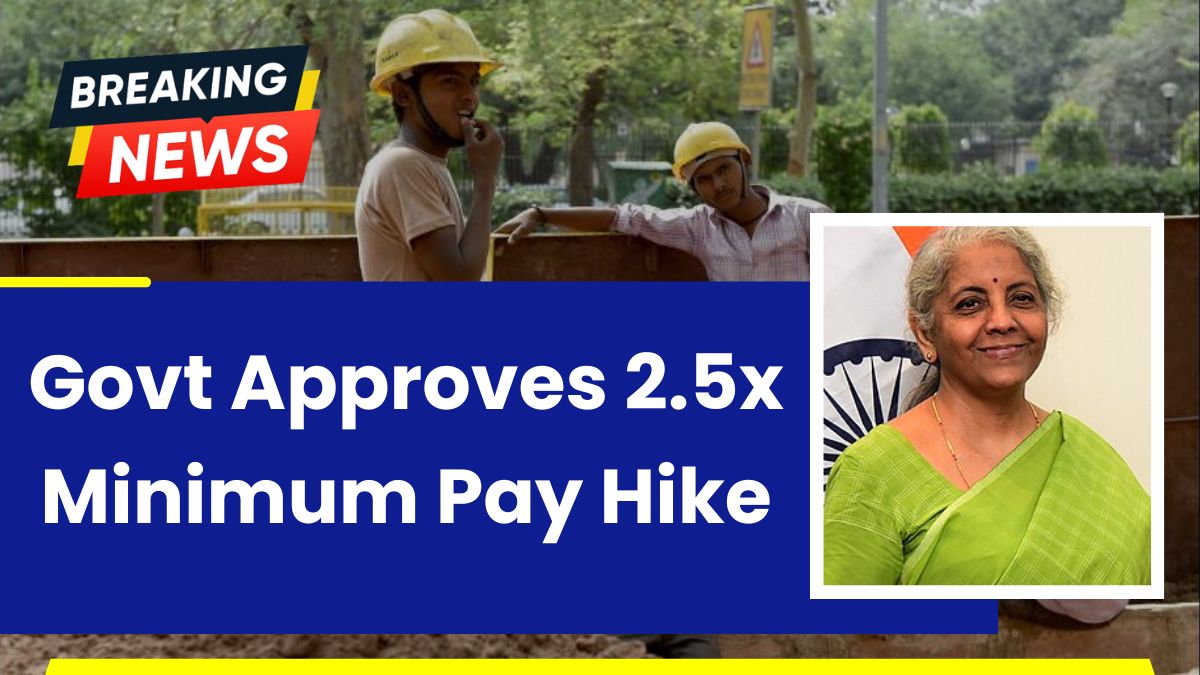
Minimum Wages 2026 : The Minimum Wages 2026 decision is not just another policy announcement that will sit quietly in government files. This one has the potential to directly impact millions of workers across India. The government has reportedly approved a major revision that could raise statutory minimum wages to nearly 2.5 times the current levels. That’s a big jump by any standard. At a time when families are dealing with rising rent, food prices, fuel costs, and school fees, this move feels like a serious attempt to match wages with today’s economic reality.
For years, minimum wage hikes have been small and gradual. Many workers felt that the increases barely kept up with inflation. This new decision signals a stronger and more aggressive approach. Instead of minor adjustments, the government seems to be opting for a structural correction that could reshape the wage landscape.
A Shift in Policy Approach
In the past, minimum wage revisions often varied from state to state and sector to sector. The system was fragmented, and implementation was uneven. Some states revised wages regularly, while others lagged behind. This led to confusion, disputes, and differences in worker pay across regions.

The 2026 plan stands out because of its scale and intent. A 2.5x increase is not a routine adjustment; it’s a bold statement. Policymakers appear to be treating wage policy as a serious economic tool rather than just a symbolic relief measure. By approving such a steep increase, the government may be trying to reset wage expectations across industries and reduce long-standing disputes between workers and employers. It also reflects acknowledgment that inflation and stagnant incomes over the years have put enormous pressure on low-income households.
Impact on Workers’ Lives
For daily wage earners, contract workers, and those in informal sectors, this increase could mean immediate and visible relief. Higher wages can reduce the need to borrow money from informal lenders at high interest rates. It can also bring more stability to households that live month to month.
When income becomes more predictable and adequate, families are able to think beyond survival. They may invest more in children’s education, better nutrition, and healthcare. A higher wage floor also gives workers a stronger bargaining position and a sense of dignity. It sends a message that their labor is valued.

Migrant workers, in particular, could benefit significantly. If wages in local areas become more viable, distress migration might reduce. Instead of moving long distances for slightly better pay, workers may find it worthwhile to stay closer to home.
Rural and Urban Effects
In rural India, higher wages often have a ripple effect. When workers earn more, they tend to spend more within their communities. This boosts demand for goods and services such as groceries, clothing, transport, and small businesses. Rural markets, which have seen sluggish consumption in recent years, may experience a short-term lift.
Urban centers, however, could face a more complicated adjustment. Small shops, restaurants, construction firms, and service providers may feel pressure from higher payroll costs. For businesses operating on thin margins, sudden wage increases can be challenging. Some may worry about rising prices, reduced hiring, or automation replacing labor.

Economists often argue that higher wages can improve productivity and reduce employee turnover. When workers feel fairly paid, they are more motivated and loyal. Over time, this can offset some of the increased labor costs. However, the transition period could test the resilience of small and medium enterprises.
Industry Concerns and Compliance
Large corporations that already pay above statutory minimum wages may not be heavily affected. For them, the new floor might simply formalize existing practices. The real challenge lies with micro and small enterprises that rely on low-cost labor to stay competitive.
Business associations have already raised concerns about how quickly the new rates will be implemented. Many have requested phased rollouts, tax relief, or easier access to credit to help manage higher wage bills. There is also discussion around clearer compliance guidelines to avoid confusion and legal disputes.

Effective implementation will be crucial. Wage hikes on paper mean little if enforcement is weak. Authorities will need to ensure that employers follow the revised rates while also supporting businesses during the transition. Striking a balance between worker protection and business sustainability will determine the long-term success of this move.
Long-Term Shifts in the Labour Market
A higher minimum wage floor can reshape employer behavior. Instead of relying on cheap labor, companies may start investing more in skill development, technology, and efficiency improvements. When wages rise, productivity often becomes a bigger focus.
From a social perspective, the decision reinforces the idea that economic growth should translate into better living standards for workers. Over the years, India has seen growth in various sectors, but wage inequality has remained a concern. A strong wage reset could help narrow income gaps at the lower end.

Policy experts believe that this move might also open the door to systematic wage indexing in the future. Linking minimum wages more closely to inflation data could prevent large gaps from forming again. Additionally, higher wages could encourage expansion of social security coverage, as more workers move into formal employment structures.
Final Verdict
The Minimum Wages 2026 decision is more than just a pay hike. It represents a structural reset in how wage policy is viewed and implemented. By raising statutory wages nearly 2.5 times, the government has signaled that fair pay and economic dignity are serious priorities.
Of course, the real impact will depend on how smoothly the policy is rolled out. Workers will look for timely enforcement, while businesses will seek clarity and support. If implemented effectively, this decision could strengthen household stability, boost local demand, and push industries toward more sustainable growth models.

In simple terms, this could be a turning point. For millions of Indian workers, it offers hope for better financial security. For the economy, it presents both opportunities and challenges. The coming months will show how well the system adapts to this bold wage reset.
Disclaimer: This article is intended for general informational purposes only and is based on publicly discussed policy developments and expert opinions. Actual minimum wage rates, implementation timelines, sector-specific rules, and compliance requirements may vary by state and industry. Readers are advised to refer to official government notifications, labour department circulars, or authorized sources for confirmed and updated details before making employment or business-related decisions.