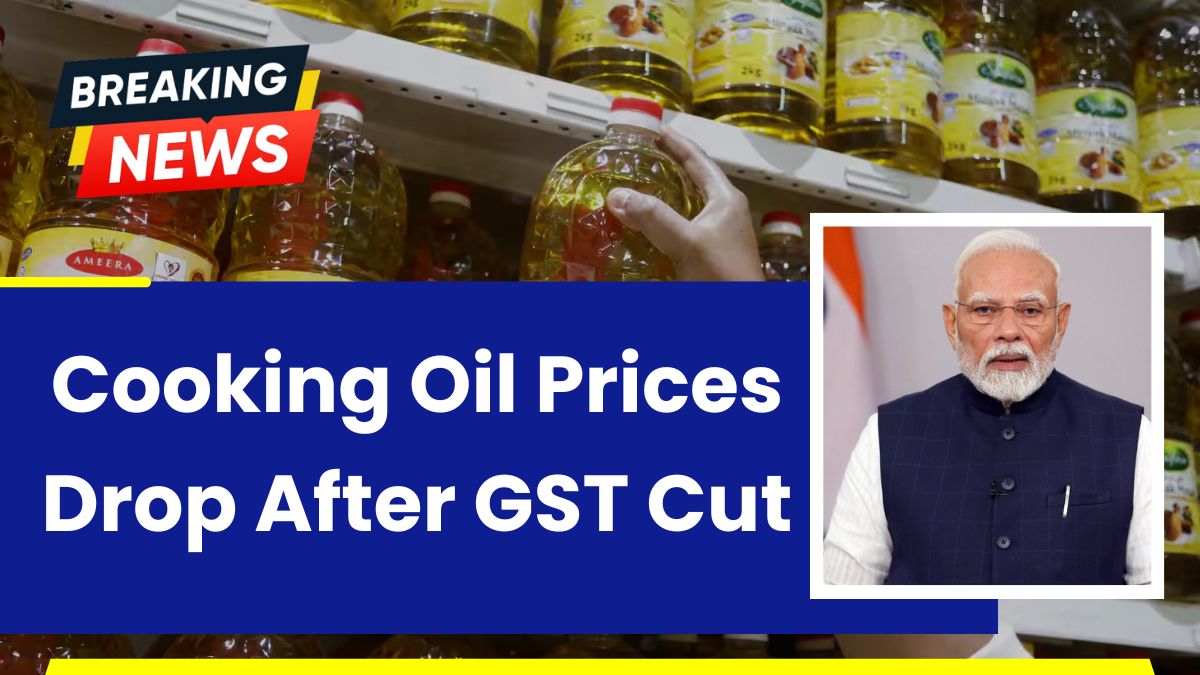
GST Relief Brings Down Edible Oil Prices : Edible oil is something we simply cannot avoid in our daily lives. From making simple dal and sabzi to frying snacks on weekends, oil is used in almost every Indian kitchen. Over the last few years, many families have noticed how cooking oil prices kept rising. Grocery bills increased, and edible oil became one of the biggest monthly expenses. Now, after recent changes in the GST structure, there are reports that prices have slightly come down in several markets. This has brought some relief to households that carefully manage their budgets.
How GST Changes Affect Prices
GST, or Goods and Services Tax, plays an important role in deciding the final price we pay for many products, including edible oil. When the government revises GST rates, it directly impacts manufacturers, distributors, and retailers. If the tax burden is reduced, companies may be able to lower their prices. However, it is important to understand that GST is just one part of the overall pricing system. Production costs, transportation charges, fuel prices, packaging expenses, and even international market rates also affect the final retail price. So while GST relief can help bring prices down, other factors continue to influence how much consumers actually pay.
Current Mustard Oil Rates
Mustard oil remains one of the most popular cooking oils, especially in northern and eastern parts of India. Many households prefer it for its strong flavor and traditional taste. According to recent market updates, mustard oil prices are currently ranging between ₹170 and ₹190 per litre in many retail markets. Local and loose oil options may be available at slightly lower prices, while well-known branded and packaged products often cost more. Prices can also vary depending on the city, demand, and supply conditions. In wholesale markets, rates may differ, and online shopping platforms sometimes offer discounts or cashback deals. It is always a good idea to compare prices before buying.

Refined Oil Price Trends
Refined oils such as soybean oil, sunflower oil, and palm oil are widely used in urban households and restaurants. These oils are generally lighter in taste and suitable for different types of cooking. At present, refined oil prices in many cities are ranging between ₹105 and ₹145 per litre. Budget-friendly brands are usually available at the lower end of this range, while premium brands with advanced filtration or fortified ingredients are priced higher. Sometimes supermarkets run special promotions, especially during festive seasons or sales events. Buying larger packs can also help reduce the cost per litre.
Impact of Packaging Changes
One thing consumers need to watch carefully is packaging size. In recent times, some companies have reduced the quantity in their packs. Instead of the traditional one-litre bottle, some brands now offer 850 ml or 900 ml packs at almost the same price. At first glance, the price tag may look unchanged, but the actual quantity is less. This practice can quietly increase the effective cost per litre. That is why it is very important to check the net quantity mentioned on the label. Comparing price per litre instead of just looking at the total price can help buyers make smarter decisions.
Who Benefits the Most
Even a small reduction in edible oil prices can make a noticeable difference for middle-class and low-income families. Since oil is used daily, a few rupees saved per litre can add up over a month. Small restaurants, dhabas, food vendors, and street food sellers also benefit from lower oil prices because oil is one of their main cooking expenses. If their costs go down, they can either maintain their profit margins or avoid increasing food prices for customers. This indirectly helps consumers as well.

Other Factors That Influence Prices
While GST relief is a positive step, edible oil prices also depend heavily on global markets. India imports a significant portion of edible oils, especially palm oil. Changes in international supply, weather conditions in producing countries, currency exchange rates, and global demand can quickly affect domestic prices. For example, if there is a crop failure in a major exporting country, prices may rise again. Similarly, higher fuel costs can increase transportation expenses, pushing retail prices up. So, price stability depends on a combination of both domestic policies and global trends.
Tips for Smart Buying
Consumers can take a few simple steps to manage their expenses better. First, compare prices across different stores and online platforms. Second, check the quantity carefully to avoid paying more for smaller packs. Third, consider buying in bulk if prices are stable and storage space is available. However, avoid unnecessary hoarding, as oil has a shelf life and quality can deteriorate over time. Finally, keep an eye on seasonal discounts and festive offers, which can provide additional savings.
Overall, the recent GST-related relief has brought some positive movement in edible oil prices. While the drop may not be huge, it is still a welcome change for many households. Prices may continue to fluctuate depending on market conditions, but for now, consumers can enjoy a bit of breathing space in their monthly grocery budget.

Disclaimer
This article is for general informational purposes only and is based on recent market observations and publicly available reports. Actual edible oil prices may vary depending on city, brand, retailer, and changing market conditions. GST policies, supply factors, and international trends can also influence rates at any time. Readers are advised to verify current prices with local retailers or official sources before making purchasing decisions.