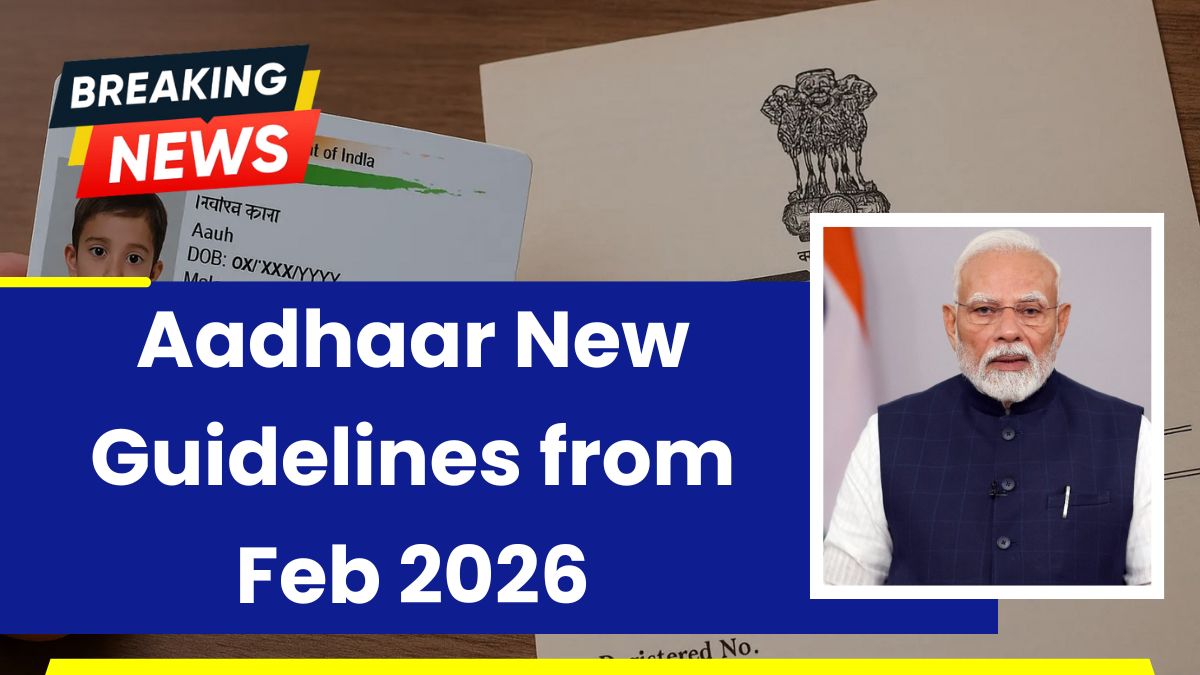
Aadhaar Update Feb 2026 : The Aadhaar card has quietly become part of almost every important task in daily life. Whether it’s opening a bank account, getting a SIM card, applying for a government scheme, or receiving subsidy money, Aadhaar is everywhere. Because of this, any change in Aadhaar rules affects crores of people. In February 2026, UIDAI and the government rolled out a fresh set of updates aimed at making the system more secure, more digital, and easier to use. If you use Aadhaar regularly, these changes are something you should definitely know about.
Why the Government Introduced the February 2026 Aadhaar Update
Over the past few years, digital services have grown very fast in India. At the same time, cases of identity fraud and misuse of personal data have also increased. The government’s main goal with the February 2026 update is to tighten security and make sure Aadhaar remains a trusted identity document. By updating rules around biometrics, mobile linking, and digital verification, UIDAI wants to reduce fake identities and make services smoother for genuine users. In simple words, the focus is on safety plus convenience.
Biometric Update Now More Important Than Ever
One of the biggest highlights of the February 2026 update is related to biometrics. UIDAI has clearly said that people who have not updated their fingerprints and iris scan in the last 10 years should do so soon. Old biometric data may not match properly during authentication, which can cause failures when you try to use Aadhaar for banking, SIM verification, or government benefits. For children, biometric update after the age of 15 has become especially important because their earlier data was taken when they were much younger. Keeping biometrics fresh in the system helps avoid service denials and makes identity checks faster and more accurate.

Aadhaar and Mobile Number Linking Is Now Crucial
Another major change is the increased importance of linking your Aadhaar with your active mobile number. From February 2026 onwards, many services are relying heavily on OTP-based verification. Whether you are doing eKYC, logging into government portals, or approving digital documents, OTP on your registered mobile number is often required. If your Aadhaar is not linked to a working mobile number, you might face trouble completing online processes. This step is meant to add an extra layer of security, making sure only the real Aadhaar holder can approve transactions or updates.
Push Towards Digital Aadhaar and PVC Aadhaar Cards
The government is also encouraging people to move away from old paper Aadhaar printouts. Digital Aadhaar, available through the mAadhaar app, is being promoted as a secure and convenient option. Along with this, the PVC Aadhaar card is gaining more importance. This small, durable card comes with enhanced security features like a QR code and hologram. Many institutions now prefer PVC Aadhaar or digital Aadhaar because they are harder to damage and easier to verify electronically. The February 2026 update strengthens QR code verification, making digital identity checks faster and more reliable.
Simplified and Stronger Aadhaar eKYC Process
The eKYC process has also been upgraded under the new update. Earlier, fingerprint authentication sometimes failed, especially for elderly people and workers whose fingerprints are worn out due to manual labor. To solve this, UIDAI is expanding the use of face authentication technology. Now, in many places, your face can be used as an additional method to confirm your identity. This makes eKYC more inclusive and reduces dependency on fingerprints alone. As a result, people who earlier faced repeated authentication failures may find the process smoother now.

New Guidelines for Name and Address Updates
UIDAI has also tightened rules around name and address changes in Aadhaar. From February 2026, there are stricter limits on how many times you can change your name. This is mainly to prevent misuse and fake identity creation. For address updates, proper documents and digital verification have become more important. Random or unsupported address changes are less likely to be accepted. These steps are designed to maintain the accuracy of Aadhaar data and stop people from using false details for fraud or illegal benefits.
Impact on Aadhaar-Linked Government and Banking Services
These updates are not just technical changes; they have real-life effects. Aadhaar is linked to many services like pensions, ration cards, LPG subsidy, scholarships, and DBT (Direct Benefit Transfer). If your Aadhaar details are outdated or your biometrics don’t match, you could face delays in receiving benefits. Banks and financial institutions are also using Aadhaar authentication for many services. That’s why keeping your Aadhaar updated is no longer optional; it’s necessary to avoid interruptions in important payments and services.
What Citizens Should Do Now
For common citizens, the message is simple: review your Aadhaar details and update them if needed. Check whether your mobile number is correctly linked. If you have not updated your biometrics in many years, consider visiting an Aadhaar Seva Kendra. Also make sure your name and address are correct and supported by valid documents. Doing these updates on time can save you from bigger hassles later, especially when you urgently need a government benefit or banking service.

Aadhaar Becoming More Digital and Secure
Overall, the February 2026 Aadhaar update shows that the system is moving towards stronger digital identity management. With better verification methods, improved security features, and more focus on updated data, Aadhaar is becoming more reliable for both citizens and institutions. While some of these steps may feel like extra effort, they are meant to protect users and ensure that benefits reach the right people without fraud.
Conclusion
The new Aadhaar updates introduced in February 2026 are all about security, accuracy, and digital convenience. From biometric refresh to mandatory mobile linking and stronger eKYC methods, these changes will affect how people use Aadhaar in daily life. By keeping your details updated and following UIDAI guidelines, you can continue to use Aadhaar smoothly for banking, government schemes, and other essential services without unnecessary problems.
Disclaimer: This article is for general informational purposes only. Aadhaar rules, procedures, and requirements may change as per UIDAI or government notifications. Readers should verify details through the official UIDAI website or authorized Aadhaar centers before making updates or decisions. The author is not responsible for any loss, delay, or issue arising from outdated or incorrect information. Always rely on official sources for final confirmation.