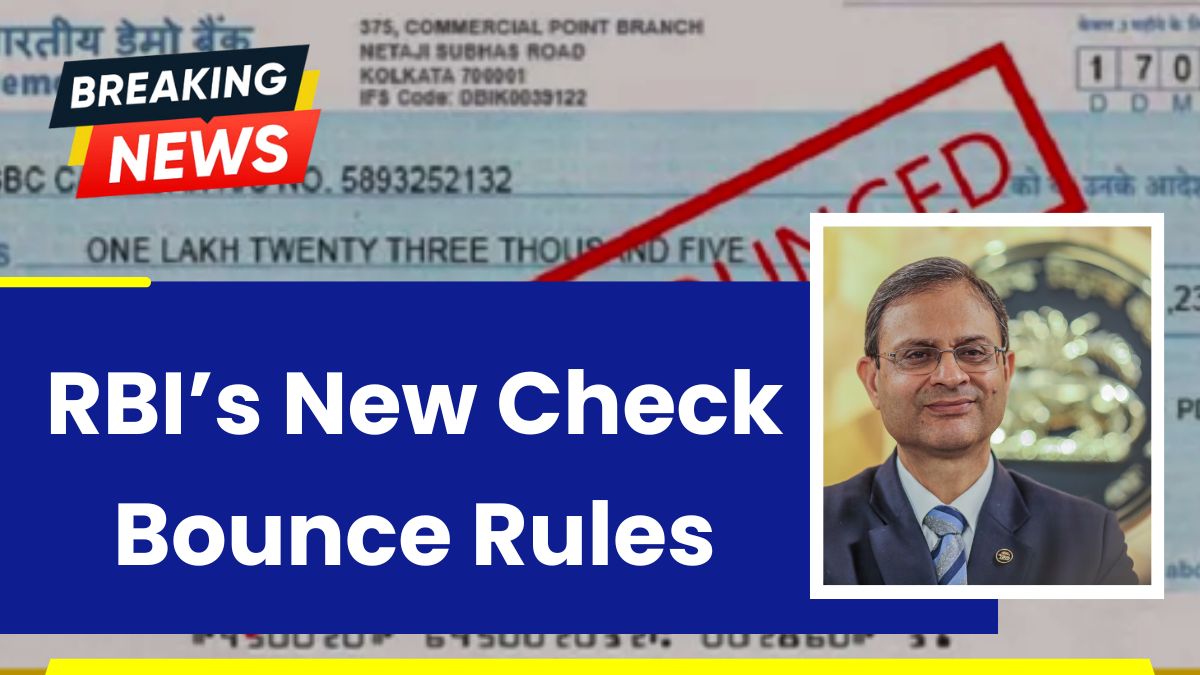
RBI’s New Check Bounce Rules : The Reserve Bank of India (RBI) has rolled out stricter rules for check bounces starting in 2026. This affects everyone who uses checks, from regular account holders to small business owners. The main aim is to make banking more transparent and reduce fraud. Even a small mistake or negligence could cost you, so it’s important to understand the rules and take steps to avoid penalties.
What Are the New Check Bounce Rules?
Under the new RBI guidelines, banks will take action if a check bounces due to insufficient funds, incorrect signatures, or technical errors. A first-time bounce usually results in a warning, but repeated bounces can lead to fines. For example, if a check bounces three times consecutively, you could be fined up to ₹10,000. Some banks may even freeze accounts or suspend checkbook issuance. Banks will now also send alerts via SMS or email immediately to keep you informed.
How Much Will the Penalty Be?
Not every check bounce carries an automatic ₹10,000 fine. The penalty depends on the circumstances. If the bounce occurs due to a minor technical issue or first-time mistake, the bank typically issues a notice first. However, repeated bounces due to insufficient funds trigger a fixed fine. Deliberate or fraudulent bounces may invite stricter action. High-risk account holders may face checkbook restrictions, making it difficult to issue checks in the future.

Impact on Individuals and Small Businesses
The new rules will mostly impact small business owners and ordinary account holders. People who rely on post-dated checks for transactions must now be extra careful. A bounced check can damage your creditworthiness and result in penalties. Banks could even blacklist you, affecting your ability to get loans or other banking services in the future. On the positive side, the rules encourage timely payments and may shift more people toward digital payments like UPI, NEFT, and RTGS.
Tips to Avoid Check Bounces
The easiest way to prevent a check from bouncing is to maintain sufficient balance in your account at all times. Always verify your account balance before issuing a check. For post-dated checks, ensure the required funds will be available on the due date. Double-check that your signature and other details are correct to prevent technical errors. Using digital payments like e-mandates, auto-debit, UPI, and NEFT is also a safer option. Keep an eye on bank alerts and contact your bank immediately if any issue arises.
Why These Rules Were Needed
Check bounces have been increasing rapidly in recent years, with intentional delays and fraudulent transactions becoming common. Small businesses often faced losses, and courts were burdened with additional cases. The RBI’s 2026 rules aim to curb these issues by enforcing stricter accountability. Everyone who issues checks now has to be more careful, ensuring timely and accurate payments. This also strengthens the banking system and supports India’s move toward a digital economy.

Conclusion
RBI’s 2026 check bounce rules are crucial for individuals, businesses, and the banking system. Fines, account freezes, and checkbook restrictions ensure checks are used responsibly. Small business owners and account holders must be cautious and consider digital alternatives where possible. These rules not only improve financial discipline but also encourage the adoption of digital payments. Being aware and following the new regulations will save you from penalties and help maintain your banking reputation.
Disclaimer
This article is intended for informational purposes only and should not be considered legal or financial advice. RBI rules regarding check bounces are subject to change, and their implementation may vary between banks. Before taking any action, issuing a check, or making financial decisions, consult your bank or a certified financial advisor. The author and the website are not responsible for any losses, penalties, or disputes that may arise from following the information provided here.