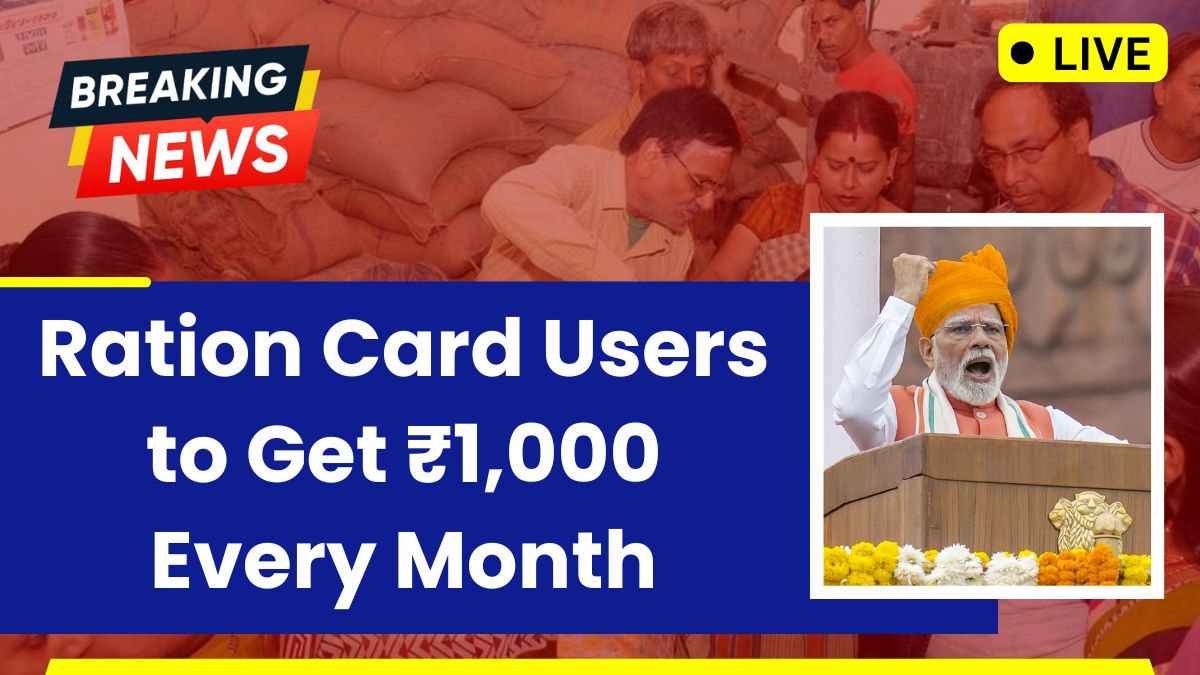
Ration Card Holders Under 2026 Rules : The talk around new ration card rules in 2026 has grabbed a lot of attention, especially among families who rely on government support to manage everyday expenses. According to recent discussions and policy updates being circulated, ration card holders may receive a monthly financial benefit of ₹1,000. For many households struggling with rising prices, this kind of regular support could make a meaningful difference. While food grains remain a key part of the public distribution system, this new step focuses on giving families direct cash assistance so they can decide how to use it based on their own needs.
Understanding the ₹1,000 Monthly Benefit
The biggest highlight of the proposed update is the idea of providing ₹1,000 per month directly to eligible ration card holders. Instead of limiting support only to subsidized rice, wheat, and other essentials, this approach adds a cash component. The money is expected to be transferred through Direct Benefit Transfer (DBT) into linked bank accounts. This gives families the freedom to use the funds for things that matter most to them, whether that’s groceries, medicines, school fees, or utility bills. Direct cash also reduces dependency on physical distribution systems alone and offers more flexibility.
Why the Government Introduced This Support
The cost of living has been steadily rising over the past few years. Even basic items like vegetables, cooking oil, LPG, transport, and healthcare have become more expensive. For low-income families, especially daily wage workers and informal sector earners, income has not always increased at the same pace as expenses. This gap creates constant financial pressure. The ₹1,000 monthly support is being seen as a relief measure meant to cushion families against inflation. While it may not cover all expenses, it can help manage small but essential monthly needs and reduce financial stress.

Inclusive Coverage for Ration Card Holders
One of the key points being discussed about the new rules is broader inclusion. The benefit is expected to cover priority households and economically weaker sections who already hold valid ration cards. In many welfare schemes, complicated eligibility rules often leave out deserving people. This time, the aim appears to be keeping the process simple and inclusive. By using existing ration card databases, authorities can identify beneficiaries without asking families to go through fresh rounds of documentation or verification again and again.
Simple Process for Receiving the Benefit
The process to receive the monthly ₹1,000 is expected to be mostly automatic. Beneficiaries may need to make sure that their ration card is linked with their Aadhaar number and that their bank account is active and correctly seeded for DBT. Once the system verifies the details, the money would be credited directly every month. This reduces the need for middlemen and cuts down on paperwork. Digital transfers also make it easier to track payments and ensure that the benefit reaches the right person on time.
How This Benefit Helps Household Planning
A fixed amount coming in every month, even if modest, can help families plan better. When people know they will receive ₹1,000 regularly, they can budget for certain expenses with more confidence. Some may use it for children’s school supplies, others for medicines, cooking gas refills, or electricity bills. Regular assistance also reduces the need to borrow small amounts from neighbors or local lenders, which often leads to debt traps. Over time, this predictable support can bring a bit more financial stability to households that usually live month to month.

Support Beyond Just Food Security
Traditionally, ration cards have been linked mainly with food security. Families get subsidized grains, which is essential, but not enough to cover other basic needs. The new approach signals a shift toward broader household support. By adding a financial component, the system acknowledges that poor and vulnerable families face multiple expenses beyond food. Education, health, transport, and energy costs are all part of daily life. Cash assistance gives people the power to decide which need is most urgent at any given time.
Impact on Women and Family Welfare
In many low-income households, women manage day-to-day expenses and household budgets. Direct cash support can empower them to make timely decisions related to food, healthcare, and children’s needs. If the money is credited into accounts linked to women beneficiaries, it can further strengthen their role in financial decision-making. Even a small monthly amount can help ensure better nutrition for children or timely purchase of medicines for elderly family members. This indirect impact on family welfare is one reason such schemes often have long-term social benefits.
Digital System and Transparency
The use of Aadhaar linking and bank transfers is meant to make the system more transparent. Earlier, welfare benefits sometimes faced issues like delays, duplication, or leakages. With DBT, every transaction is recorded, making it easier for authorities to monitor and for beneficiaries to track payments. Many people already receive LPG subsidies and other benefits through similar systems, so the process may feel familiar. SMS alerts and bank passbooks can help families confirm whether the amount has been credited.

Challenges That May Still Exist
Even with a good plan, challenges can come up. Some people in rural or remote areas may not have properly linked bank accounts or updated Aadhaar details. Technical errors, inactive accounts, or mismatched information can delay payments. Awareness is another issue, as not all beneficiaries may know how to check their status or update their details. To make the scheme effective, local authorities and fair price shop dealers may need to spread awareness and help people complete the required formalities.
Long-Term Importance of Such Support
Monthly financial assistance, even in small amounts, can have a cumulative impact over time. It helps reduce immediate financial pressure and supports basic dignity. When combined with existing food subsidies, healthcare schemes, and housing programs, it creates a stronger social safety net. While the amount may not seem very large on paper, for families with limited or irregular income, ₹1,000 can cover several days’ worth of essential expenses. That’s why this update is being watched closely by millions across the country.
Looking Ahead
As with any major welfare update, final rules, eligibility conditions, and rollout timelines will be clarified through official announcements. People are advised to keep their documents updated and follow information shared through government portals or local authorities. If implemented smoothly, this monthly support could become an important part of how ration cards function in the future — not just as a food security tool, but as a broader financial support system for vulnerable households.

Disclaimer: This article is for general informational purposes only and is based on ongoing discussions and publicly circulating updates regarding ration card rule changes. Final eligibility, benefit amounts, and implementation details will depend on official government notifications. Readers should verify information through authorized government portals, local ration offices, or official announcements before making any decisions or assumptions about receiving benefits.