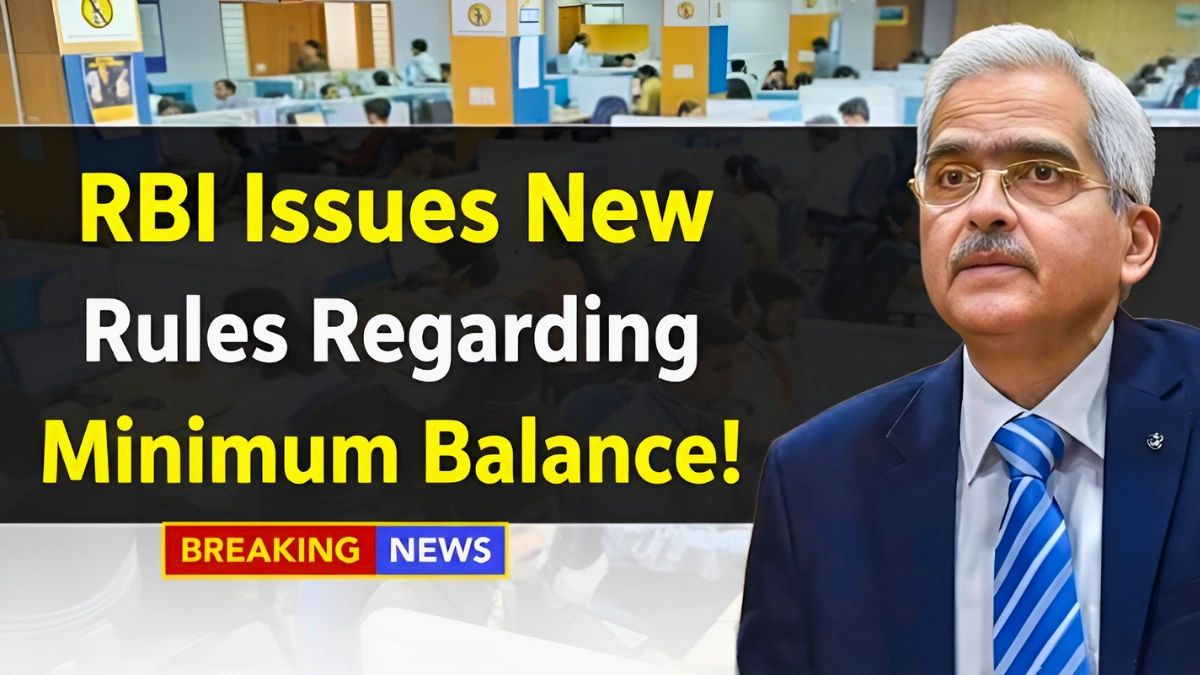
RBI Minimum Balance Rule Update 2026 has brought a much-needed sense of relief for bank customers across India. For a long time, maintaining a minimum balance in savings accounts felt stressful, especially for people banking with SBI, PNB, and HDFC. Many customers experienced sudden deductions when their account balance dropped, often without proper explanation. These charges created confusion and frustration, particularly among those who were not aware of the exact rules. In 2026, the Reserve Bank of India stepped in with a major update to make banking simpler, fairer, and more transparent for everyone.
The new RBI minimum balance rule update focuses strongly on reducing unnecessary penalties, improving transparency, and ensuring clear communication between banks and customers. The objective is to protect account holders from hidden charges while also ensuring banks follow reasonable and customer-friendly practices. This reform is especially important for people with irregular incomes, pensioners, students, and rural customers who often find it difficult to maintain a fixed balance every month.
Why the RBI Introduced This Change

The RBI noticed that minimum balance penalties had become one of the most common reasons for customer complaints. Many people were losing money through deductions that felt excessive or unfair. In several cases, banks failed to clearly inform customers about balance requirements or upcoming charges. This lack of clarity led to anxiety and distrust, particularly among low-income users who depend on every rupee in their account.
To address this issue, the RBI decided to standardize and cap penalty charges across banks. The intention was not to completely remove minimum balance rules, but to ensure penalties are reasonable, well-explained, and never harsh. This balanced approach protects customers while maintaining basic banking discipline.
Big Relief for SBI Account Holders
State Bank of India customers are among the biggest beneficiaries of the 2026 update. SBI has significantly reduced penalty charges, especially for customers in rural and semi-urban areas. Many SBI branches now offer savings accounts with very low or even zero penalties for failing to maintain the minimum balance.

Urban SBI customers also benefit from better transparency. The bank now sends advance alerts before applying any charge, giving customers enough time to add funds and avoid deductions. Overall, SBI’s updated system reduces fear around savings accounts and gives customers greater control over their money.
Clearer Rules for PNB Customers
Punjab National Bank customers have long complained about unpredictable low-balance charges. Under the new RBI guidelines, PNB is now required to clearly explain its minimum balance rules and penalty limits. Customers receive advance notifications before any deduction is made, which removes uncertainty.
This change is particularly helpful for pensioners and low-income customers who rely on fixed monthly credits. Knowing in advance when a penalty might apply allows them to plan their finances better. With clearer communication, banking with PNB feels much less stressful and more customer-friendly.

Changes for HDFC and Private Banks
Private banks like HDFC, which traditionally maintained higher minimum balance requirements, are also required to follow the new RBI framework. Penalties must now be capped, proportionate, and clearly communicated. Customers must be informed in advance if their balance falls below the required level.
HDFC now sends balance alerts through SMS and mobile banking apps, helping customers take quick action to avoid charges. These steps improve transparency and ensure that private bank customers are no longer caught off guard by sudden deductions.
How Penalty Charges Are Now Controlled
One of the most important aspects of the RBI update is the cap on penalty amounts. Banks are no longer allowed to deduct large sums just because an account goes below the minimum balance. The RBI has defined reasonable limits based on account type and location.

Urban savings accounts now face much lower maximum penalties than before. Rural accounts benefit even more, with very small or zero charges in many cases. Jan Dhan accounts continue to remain penalty-free, and senior citizen accounts now attract much lower charges compared to earlier years.
Who Benefits the Most From This Update
The RBI’s focus is clearly on financial inclusion. Students who depend on part-time or irregular income no longer need to worry about heavy penalties during low-income months. Pensioners benefit from reduced charges that respect their fixed monthly earnings.
Rural customers gain the most, as many banks now offer accounts with minimal or no penalties. Low-income earners and people who use their accounts occasionally also feel relief, as the fear of losing money due to technical balance rules has reduced significantly.

Mandatory Alerts and Better Communication
Under the 2026 rules, banks are required to inform customers when their balance drops below the minimum requirement. These alerts are sent through SMS, email, or mobile banking apps. This simple step gives customers enough time to act before any charge is applied.
Mandatory alerts improve transparency and trust. Customers no longer feel surprised or cheated by unexpected deductions. Clear communication ensures people always understand the status of their account.
Digital Banking Makes Compliance Easier
Digital banking plays a major role in helping customers avoid penalties. Banking apps now provide real-time balance updates, low-balance warnings, and easy fund transfer options. Even customers who are not very tech-savvy benefit from simple alerts and reminders.

These digital tools reduce the need for frequent branch visits and make account management easier. As a result, customers can maintain their balances more efficiently and avoid unnecessary stress.
What Customers Should Do Going Forward
Even with RBI reforms in place, customers should stay alert. It is important to check the updated minimum balance rules for your specific account type. Keeping your mobile number and email updated with the bank ensures that you receive alerts on time.
Regularly checking bank statements helps identify errors early. If any charges are deducted unfairly, customers can use the RBI grievance system to raise complaints and seek resolution.

The RBI Minimum Balance Rule Update 2026 marks a major shift toward customer protection. By capping penalties, enforcing advance alerts, and supporting vulnerable groups, the RBI has made Indian banking more transparent and humane. Customers of SBI, PNB, HDFC, and other banks can now manage their savings with greater peace of mind and confidence.
Disclaimer
This article is for general informational purposes only and should not be treated as financial or legal advice. Banking rules, minimum balance requirements, and penalty charges may differ depending on the bank, account type, and location. Customers are advised to verify details through official bank notifications or directly with their bank.